









April 13, 2026 | Dani Morgutia, Senior Program Manager
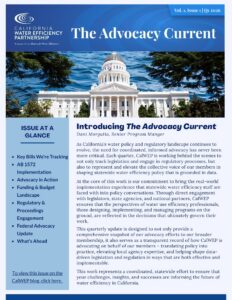 As California’s water policy and regulatory landscape continues to evolve, the need for coordinated, informed advocacy has never been more critical. Each quarter, CalWEP is working behind the scenes to not only track legislation and engage in regulatory processes, but also to represent and elevate the collective voice of our members in shaping statewide water efficiency policy that is grounded in data.
At the core of this work is our commitment to bring the real-world implementation experience that statewide water efficiency staff are faced with into policy conversations. Through direct engagement with legislators, state agencies, and national partners, CalWEP ensures that the perspectives of water use efficiency professionals, those designing, implementing, and managing programs on the ground, are reflected in the decisions that ultimately govern their work.
This quarterly update is designed to not only provide a comprehensive snapshot of our advocacy efforts to our broader membership, it also serves as a transparent record of how CalWEP is advocating on behalf of our members – translating policy into practice, elevating local agency expertise, and helping shape legislation and regulation in ways that are both effective and implementable.
This work represents a coordinated, statewide effort to ensure that your challenges, insights, and successes are informing the future of water efficiency in California.
Download the latest issue here.
Quarter at a Glance
- Advocacy Committee Meetings Held: 3 (January, February, March)
- Bills Tracked: 25+
- Positions Taken (Support/Oppose): Multiple (state and federal)
- Letters Submitted / Coalition Engagements: Multiple
- Key Focus Areas:
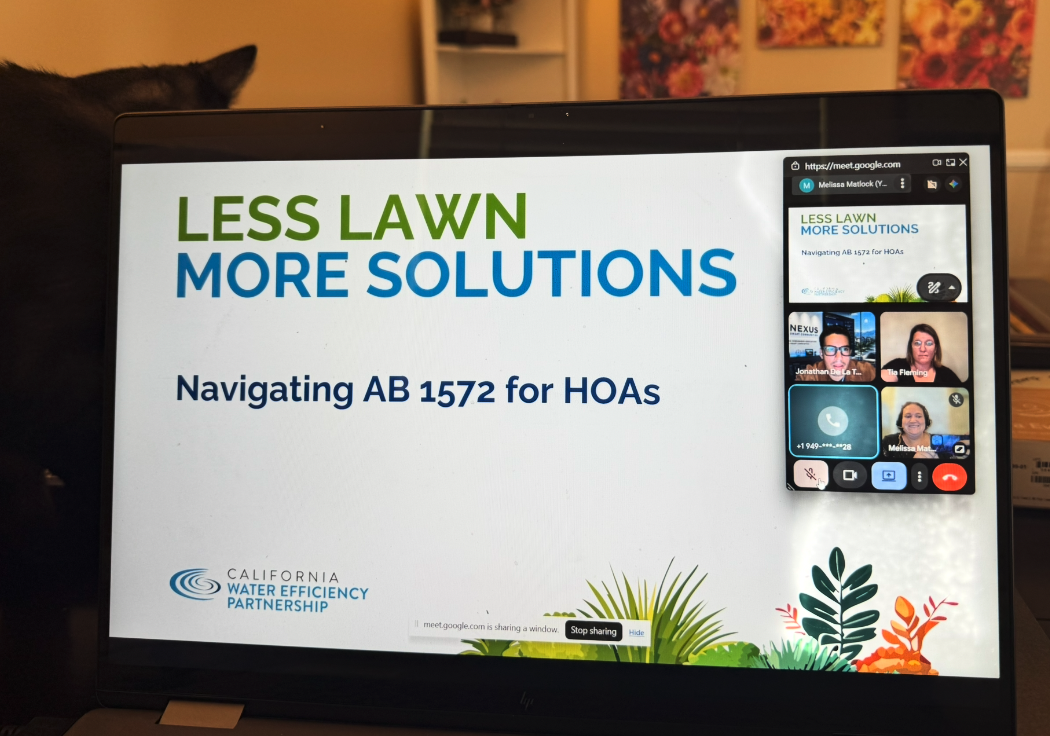
- AB 1572 implementation and regulatory coordination
- Funding and budget alignment for water use efficiency
- Regulatory proceedings and rate case engagement
- Emerging policy areas, including large water-use sectors
State Legislative Engagement
CalWEP continues to actively track and engage in state legislation impacting water use efficiency, with a focus on ensuring policies are both effective and implementable.
Key Bills –
AB 2180 (Proportional Water Rates Clarification)
CalWEP formally supported AB 2180 and joined a broader coalition to advance this bill through the legislative process. The bill provides important clarification on proportional water rate structures, supporting equitable and effective rate design. CalWEP also developed a blog post to inform members of our position and encourage engagement. The bill passed the Assembly Local Government Committee and is expected to continue moving forward this session.
AB 35 (Climate Bond Implementation Acceleration)
CalWEP submitted a support letter on AB 35, which focuses on accelerating implementation of climate bond funding. Our engagement emphasized the importance of ensuring water use efficiency programs are effectively positioned within broader climate investments.
Emerging Legislative Engagement
In addition to bills where CalWEP has taken formal positions, we are actively monitoring a broader set of proposals that may impact water efficiency implementation.
This includes legislation related to:
- Enforcement authority and compliance frameworks
- Water demand forecasting and reporting
- Local agency responsibilities tied to development and land use
- Integration of water efficiency into broader infrastructure planning
CalWEP is working closely with members and partners to assess these proposals as they evolve and determine where engagement is most needed.
AB 1572 Implementation & Regulatory Engagement
AB 1572 remains a central focus of CalWEP’s advocacy work, with significant effort dedicated this quarter to supporting implementation and engaging in regulatory development.
State Water Board Engagement
CalWEP has been working closely with the State Water Resources Control Board on the development of the AB 1572 compliance framework, including the self-certification portal. During Q1, CalWEP convened members of the Advocacy Committee to review draft portal questions and provide coordinated feedback to the Board.
Key areas of engagement included:
- Clarifying definitions of non-functional turf
- Addressing property-level reporting challenges and ownership distinctions
- Ensuring usability and minimizing administrative burden for agencies
- Aligning state-level requirements with on-the-ground implementation realities
This collaborative approach ensures that agency perspectives are reflected early in the regulatory process, before requirements are finalized.
Member-Facing Guidance and Communications
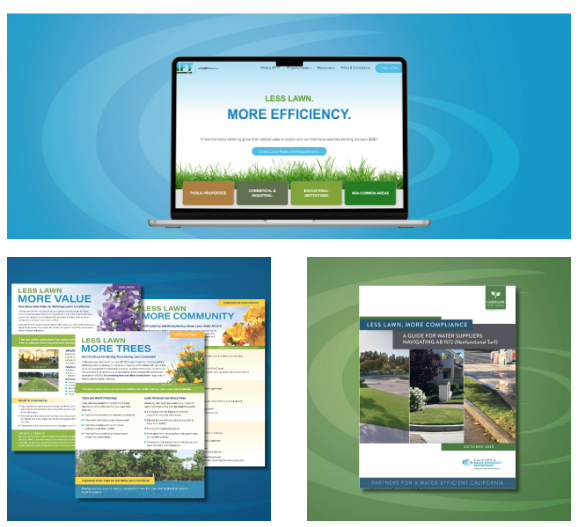
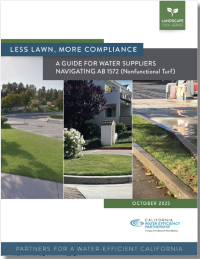
In parallel with regulatory engagement, CalWEP released a statewide article, “The Time to Act is Now: Preparing Public Agencies for AB 1572 Compliance,” which provides agencies with a strategic framework for planning, internal coordination, and customer-facing communications ahead of the January 1, 2027 compliance deadline. This effort reflects CalWEP’s commitment to supporting not just policy development, but also practical implementation on the ground.
Advocacy in Action
Throughout Q1, CalWEP advanced multiple advocacy efforts across state and federal levels, combining formal policy engagement with member-facing communications.
Key activities included:
- Submitting support and opposition letters on priority legislation at both the state and federal levels
- Participating in coalition efforts, including coordinated sign-on letters to advance or oppose key bills
- Developing targeted blog communications to keep members informed and aligned
- Engaging the Advocacy Committee to vet positions and inform advocacy strategy
Notable efforts included:
- Supporting AB 2180 through coalition engagement and member communications
- Submitting a support letter on AB 35 to advance climate bond implementation
- Opposing federal legislation, including the Shower Act and H.R. 4626, which could weaken water and energy efficiency standards
Advocacy Leadership & Representation
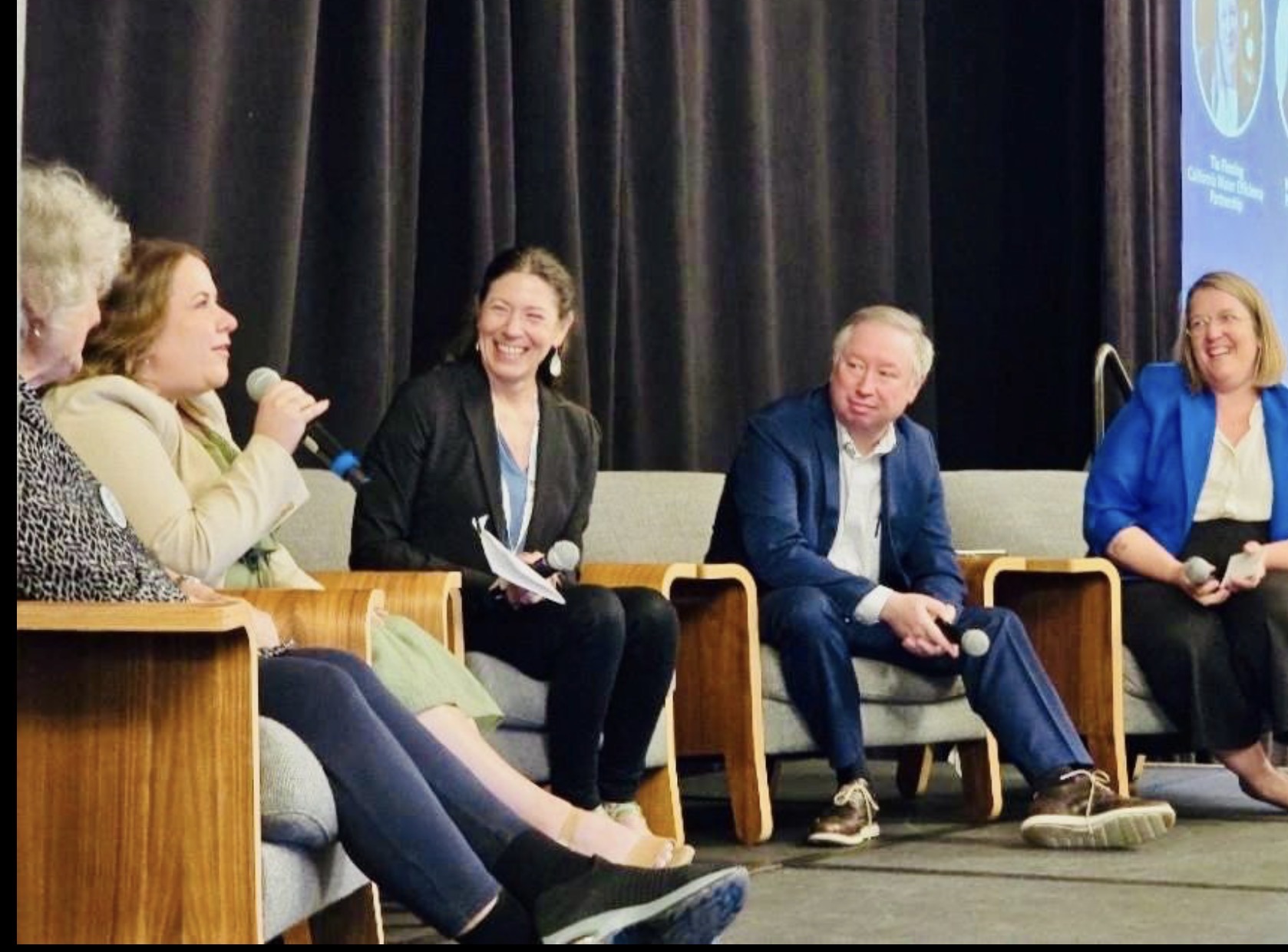
CalWEP Executive Director Tia Fleming was recently appointed to serve on the California Water Plan Advisory Committee, where she is helping shape the long-term vision for water management across the state. This role ensures that water use efficiency and the realities of implementation are embedded in statewide planning efforts and carried through from policy into action.
In addition, CalWEP Deputy Director Melissa Matlock represented member interests directly at the State Capitol this quarter, delivering testimony to the California State Assembly Water, Parks, and Wildlife Committee that elevated the experiences of water suppliers and highlighted the operational realities agencies navigate every day.
Federal Advocacy Updates
CalWEP continues to coordinate with national partners to monitor and respond to federal policy developments impacting water efficiency.
Key areas of focus this quarter included:
- Ongoing opposition to efforts that would weaken federal appliance efficiency standards
- Monitoring the status of WaterSense and ENERGY STAR programs
- Supporting federal policy efforts that maintain or expand funding and incentives for water efficiency
Funding & Budget Landscape
Funding continues to play a critical role in advancing water use efficiency programs across California. CalWEP remains focused on ensuring that water use efficiency is appropriately prioritized within state funding frameworks and that programs are designed to be accessible and effective for local agencies.
This quarter, CalWEP tracked developments related to:
- Climate bond funding implementation (including AB 35)
- State-administered funding programs through agencies such as DWR and the State Water Board
- Broader budget considerations that may influence conservation program availability and scale
Regulatory & Proceedings Engagement
In addition to legislative and regulatory engagement, we are actively participating in formal proceedings to protect and advance water use efficiency programs.
This includes involvement in rate case proceedings, where CalWEP has engaged to ensure that conservation programs are appropriately valued and not reduced or eliminated in favor of short-term cost considerations.
These efforts reflect CalWEP’s broader commitment to supporting long-term water reliability through sustained investment in water use efficiency.
What’s Ahead
Looking ahead, CalWEP will continue to build on this work as the legislative session progresses and key regulatory efforts advance.
Priority areas include:
- Continued engagement with the State Water Board on AB 1572 implementation and certification processes
- Monitoring and engaging in state legislation as bills move through committee and floor votes
- Ongoing coordination on federal policy developments affecting water efficiency standards
- Engagement with the California Energy Commission on irrigation controller standards
Emerging Focus: Data Center Water Use & Policy
A growing area of focus this legislative session is the expansion of data center-related legislation and its implications for water use. CalWEP is actively monitoring several proposals, including AB 2469, AB 2619, AB 1577, and SB 887, which introduce new considerations around water use disclosure, permitting, and environmental review.
These proposals raise important questions for water agencies, including:
- New water demand reporting and forecasting requirements
- Potential classification changes for large consumptive users
- Increased local agency responsibilities in development review
- Integration of water supply considerations into land use decisions
This is an area we anticipate will continue to evolve, and CalWEP will remain engaged to ensure that any new requirements are practical and aligned with agency capacity.
Advancing Member Priorities Through Advocacy
CalWEP’s advocacy work is grounded in a commitment to supporting our members, not only through programs and resources, but by actively representing your interests in the policies and regulations that shape your work.
We appreciate the continued engagement of our Advocacy Committee and broader membership, whose insight and expertise are essential to this work. As always, we welcome your feedback and participation as we continue advancing water use efficiency across California.
The California Water Efficiency Partnership (CalWEP) is a 501(c)(3) nonprofit organization. CalWEP is not a registered lobbying organization. Our engagement in legislative and regulatory processes — including tracking legislation, submitting public comments, and participating in coalitions — is conducted in compliance with federal regulations governing 501(c)(3) organizations.