












April 29, 2026 | Dani Morgutia, Senior Program Manager
In the current General Rate Case proceeding for California-American Water Company (A.25-07-003), the California Public Utilities Commission is evaluating, among many issues, whether conservation program funding should continue or be suspended.
In testimony filed in this proceeding, the Public Advocates Office argues that California-American Water Company’s conservation programs are no longer necessary. The rationale? Water use has declined. Reservoirs are strong. Customers have adapted. Conservation, it suggests, has already become “a way of life.”
And that is precisely why CalWEP decided to become a party in this case. When a regulatory proceeding begins to treat conservation success as a reason to dismantle conservation investment, something foundational is at risk.
Many years ago, Justice Ruth Bader Ginsburg once warned:
“Throwing out preclearance when it has worked and is continuing to work to stop discriminatory changes is like throwing away your umbrella in a rainstorm because you are not getting wet.”
Justice Ginsburg was speaking about civil rights protections, but we believe the logic applies powerfully here as well.
Conservation programs are working. California’s water use is lower than it was two decades ago. Efficiency standards are in place. Reservoirs may be strong today. But that is not evidence that conservation can be paused. On the contrary, it is evidence that conservation infrastructure is functioning.
A.25-07-003 is a test of whether California will continue investing in the very tools that have made conservation a durable part of our water system or whether it will assume that past gains will sustain themselves.
CalWEP filed testimony because conservation is a permanent legal obligation under Making Conservation a Way of Life and Assembly Bill 1572. It is a core element of the State’s climate adaptation strategy, and it is the most cost-effective water supply resource available to California.
What We Challenged in the Proceeding
CalWEP’s testimony, now formally accepted into the record by the CPUC, addresses several specific claims in the filing that we believe deserve serious scrutiny.
- The Claim That Conservation Is Already “Complete”
The suggestion that conservation funding can be eradicated because conservation is already embedded in customer behavior ignores current law.
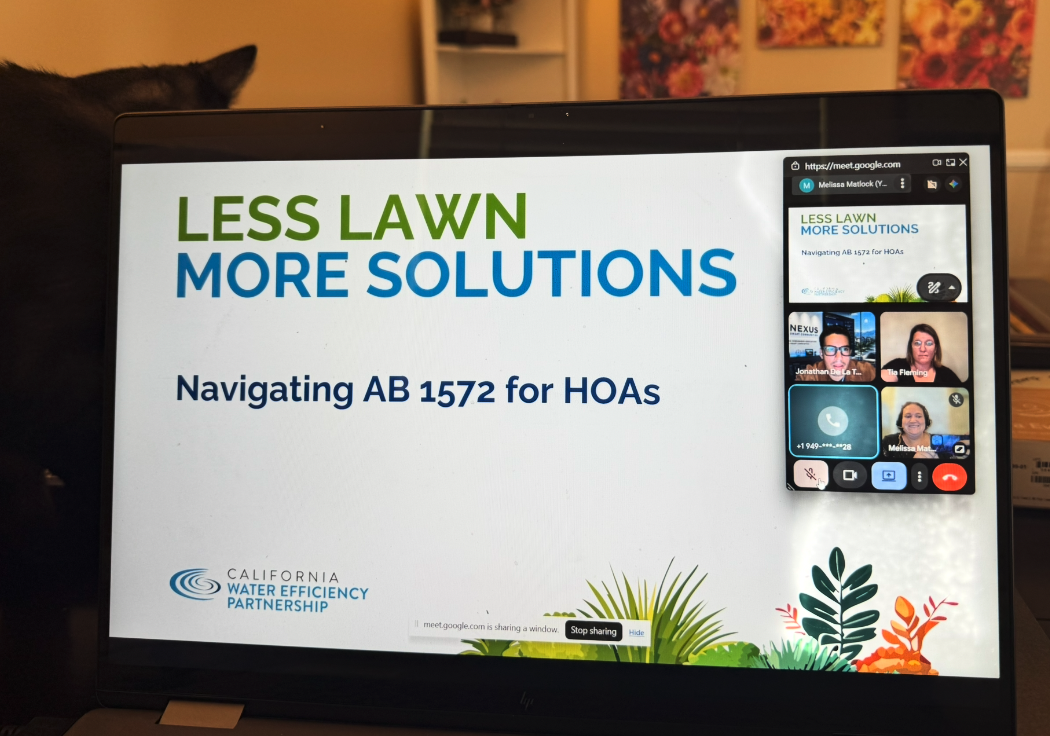
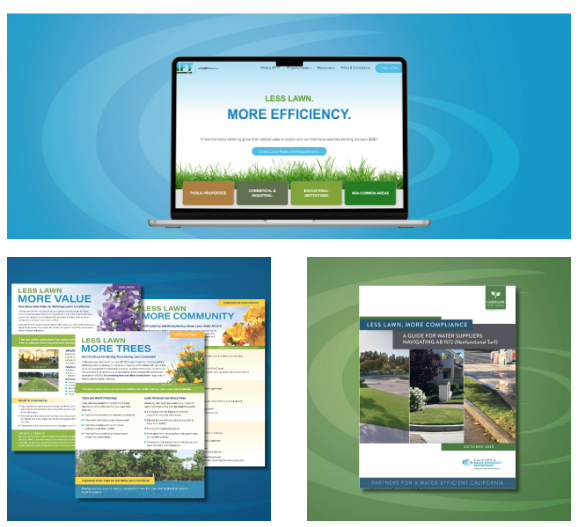
Urban retail water suppliers must comply with Making Conservation a California Way of Life, which establishes progressively stringent water use objectives through 2040 and beyond. Assembly Bill 1572 imposes enforceable restrictions on non-functional turf at commercial, industrial, and institutional properties. These requirements are expanding…not shrinking. So scaling back conservation funding while statutory obligations increase is contradiction.
- The Assertion That Strong Reservoir Levels Justify Pulling Back
The filing emphasizes that reservoirs are at approximately 130% of historical averages and suggests drought conditions have ended. But California’s water supply system cannot be managed based on single-season storage levels. Snowpack remains volatile. The Colorado River’s post-2026 operating guidelines remain unresolved. The State’s own Water Supply Strategy explicitly prepares for hotter and drier conditions due to climate change. Conservation programs are long-term risk management tools designed precisely to avoid reactive cycles.
- The Idea That Water Savings Sustain Themselves
Another implication is that because water use has declined historically, conservation programs can now be suspended. Research — including the Alliance for Water Efficiency’s assessment of demand hardening — shows that efficiency gains are not self-sustaining without continued programmatic support. Without active conservation programs, savings erode, variability increases, and system risk grows.
- The Importance of Revenue Stability
Conservation reduces water sales by design. Revenue decoupling mechanisms exist to ensure utilities are not financially penalized for achieving conservation goals. Suspending conservation funding while relying on volumetric revenue creates instability and reintroduces structural disincentives to efficiency. Conservation programs and revenue stability tools are complementary.
Why This Matters
CalWEP did not become a party in this proceeding because conservation funding is not a discretionary line item. It is statutory compliance, climate resilience, and it is long-term cost containment for ratepayers.
🔊 The rainstorm has not ended.
🔊 The hydrology has not stabilized.
🔊 The statutory requirements have not disappeared.
You do not throw away your umbrella simply because you are not wet today.