







November 19, 2026
Turning Policy Into Progress
Tia Fleming, Executive Director
Hello again, CalWEP Community. Dani is out on leave welcoming a new baby, so I’m filling in for this edition. Congratulations to her and her beautiful family! We’re glad to have her news to share, and we’re also glad to have the chance to keep this update moving while she’s away.
This quarter brought a lot of movement, and the biggest development for many of our members is the data center package the Governor signed in September. Those bills are now law, which changes how CalWEP approaches the work ahead. We spent much of the session tracking them and diving into our own research on the subject, and we’ll keep following how they’re implemented.
Beyond that, our work this quarter spanned AB 1572 implementation, the Water Plan 2028 Advisory Committee, and the amazing launch of the Initiative to Streamline Water Data Reporting in California. Each one connects to the same question our members ask every day: how do we make the rules work in practice for the people running programs?
The pages that follow take that question in turn, and I hope you’ll find something useful in each.
Quarter at a Glance: Advocacy & Regulatory Highlights
- Continued to make progress in our partnerships with CaDC, the State Water Board, and the Dept of Water Resources through their technical assistance pilots.
- Submitted comments to the California Department of Housing and Community Development on draft research and recommendations for residential rainwater catchment systems under SB 597.
- Helped members understand how California’s new Zone 0 defensible space rules intersect with existing landscape regulations and inform water-efficient landscape transformation programs.
- Co-led the launch of the Initiative to Streamline Water Data Reporting in California and invited urban water suppliers to help identify reporting improvements through the Reporting Impact Survey.
- Dove into policy recommendations for the 2028 Water Plan.
Two Technical Assistance Pilots Help Agencies Make Conservation a California Way of Life
CalWEP is working on two pilots with both the Department of Water Resources and the State Water Resources Control Board to help urban water suppliers meet the Making Conservation a California Way of Life regulation. Two pilots are testing the kind of hands-on support agencies need to complete their reporting and planning.
DWR’s pilot has served seven agencies and is nearing completion. The State Water Board’s pilot is kicking of some hands on support for some agencies but also runs through the Getting to Efficiency webinar series, developed with the California Data Collaborative and CalWEP.
Through the Getting to Efficiency pilot, CalWEP developed the UWUO Year-Round Reporting Calendar, a monthly checklist that spreads reporting work across the year. The goal is to make December a final assembly month rather than a data rescue.
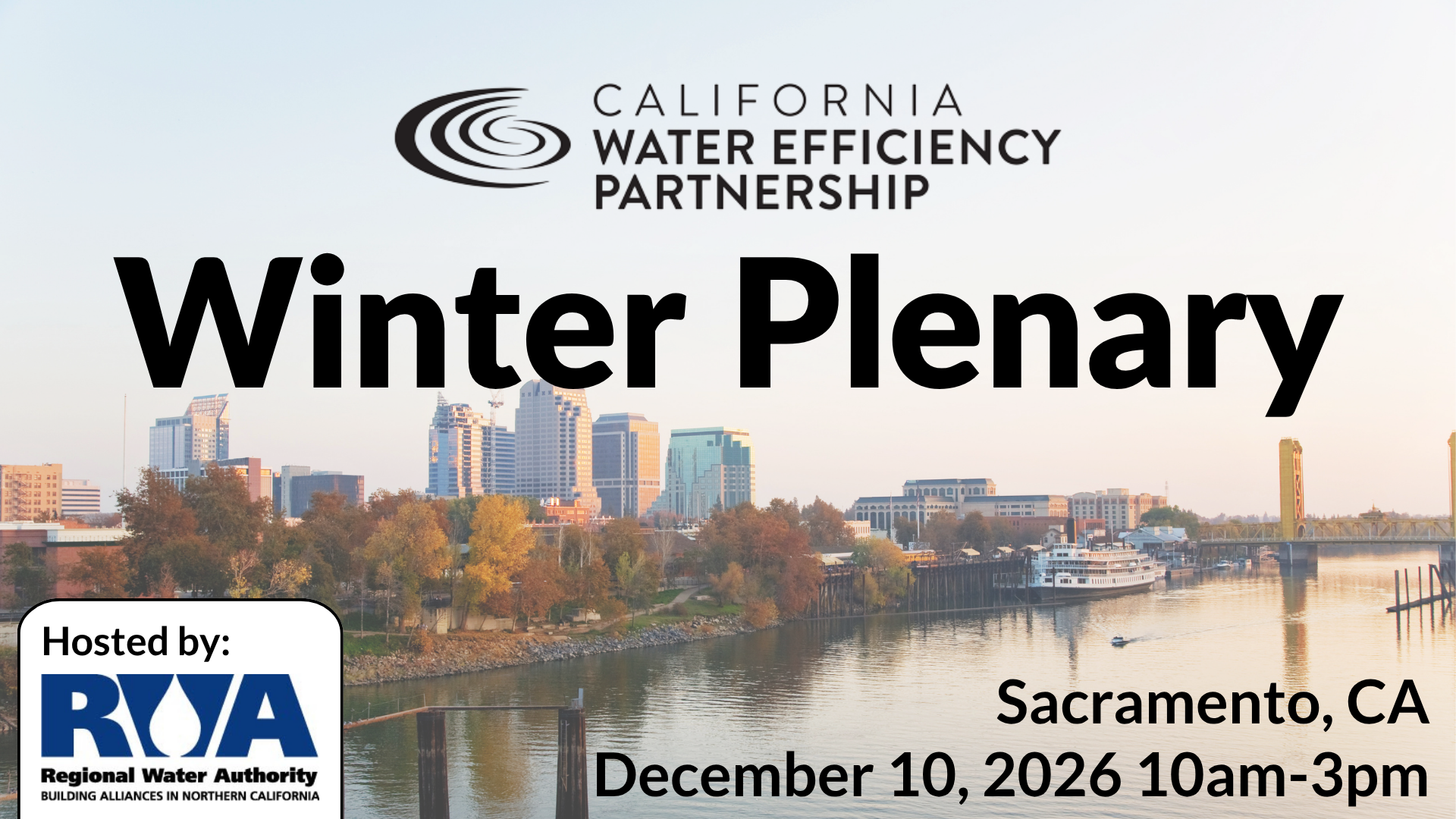
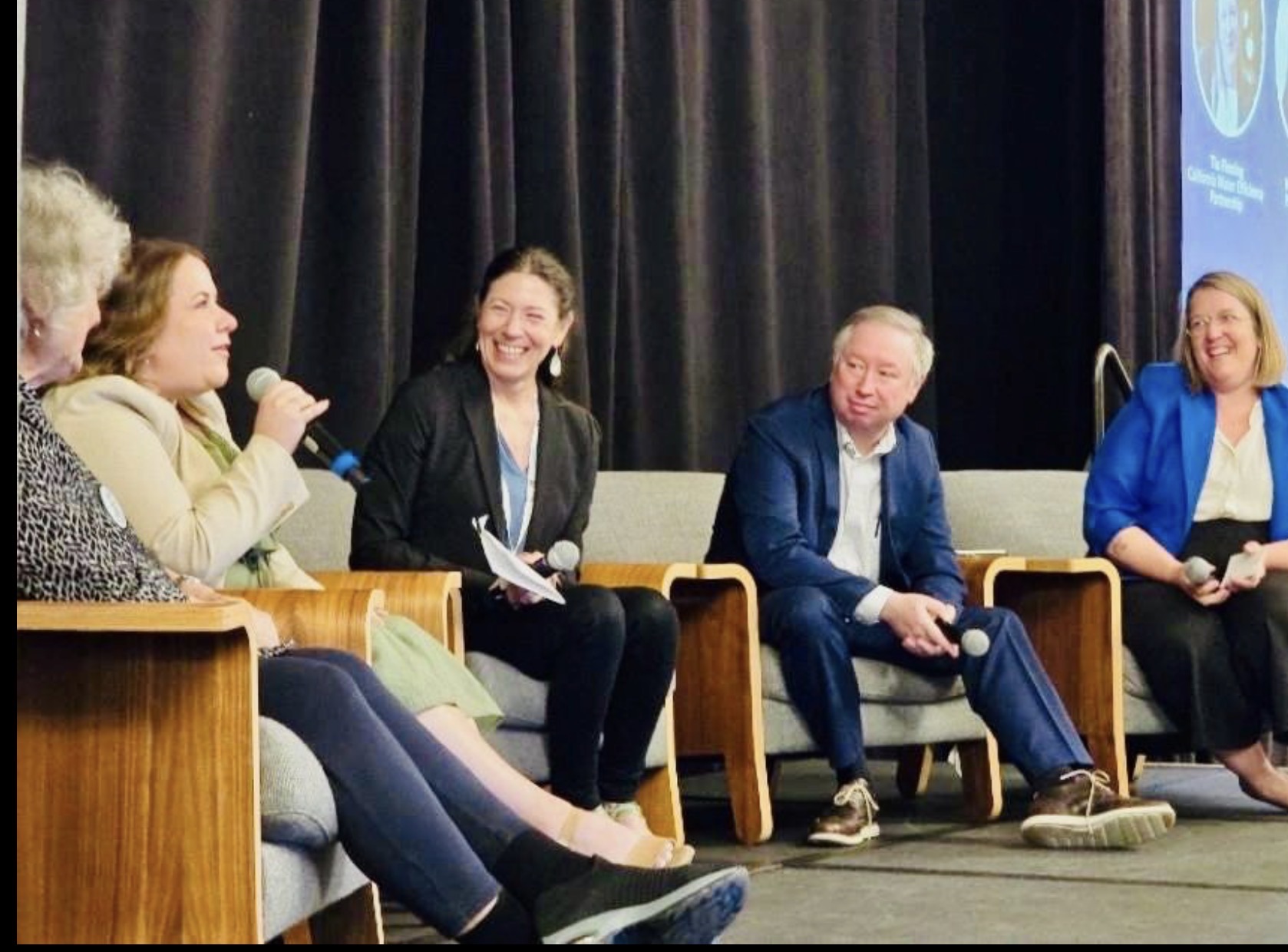
Both pilots will be featured at CalWEP’s Winter Plenary in Sacramento on December 10, 2026, where members can hear what the pilots delivered and what it means for their own compliance work. Learn more and register here.
Regulatory and Policy Spotlight: CalWEP Weighs In on SB 597 Research and Recommendations
CalWEP has submitted comments to the California Department of Housing and Community Development (HCD) on its draft research and recommendations for residential rainwater catchment systems developed pursuant to Senate Bill 597.
CalWEP’s involvement with SB 597 dates back to 2024, when we submitted a letter supporting the legislation and its goal of better understanding how rainwater catchment systems could contribute to water conservation, efficiency, and local water supply resiliency in California.
Now that the legislation has become law, HCD is carrying out that work and CalWEP is continuing its engagement as the state considers what comes next. SB 597 directed HCD to research and develop recommendations regarding building standards for rainwater catchment systems used for nonpotable purposes in newly constructed residential dwellings.
Read the full article: From Legislation to Implementation: CalWEP Weighs In on SB 597 Research and Recommendations
Zone 0 Is Coming: What California’s New Defensible Space Rules Mean for Water-Efficient Landscape Transformation
On August 19, the California Board of Forestry and Fire Protection approved the final draft of California’s first-in-the-nation Zone 0 defensible space regulations, establishing new wildfire resilience requirements for the first five feet surrounding homes and structures in designated fire hazard areas. For California’s water use efficiency community, this may sound like a wildfire policy issue. But it’s also a landscape transformation issue.
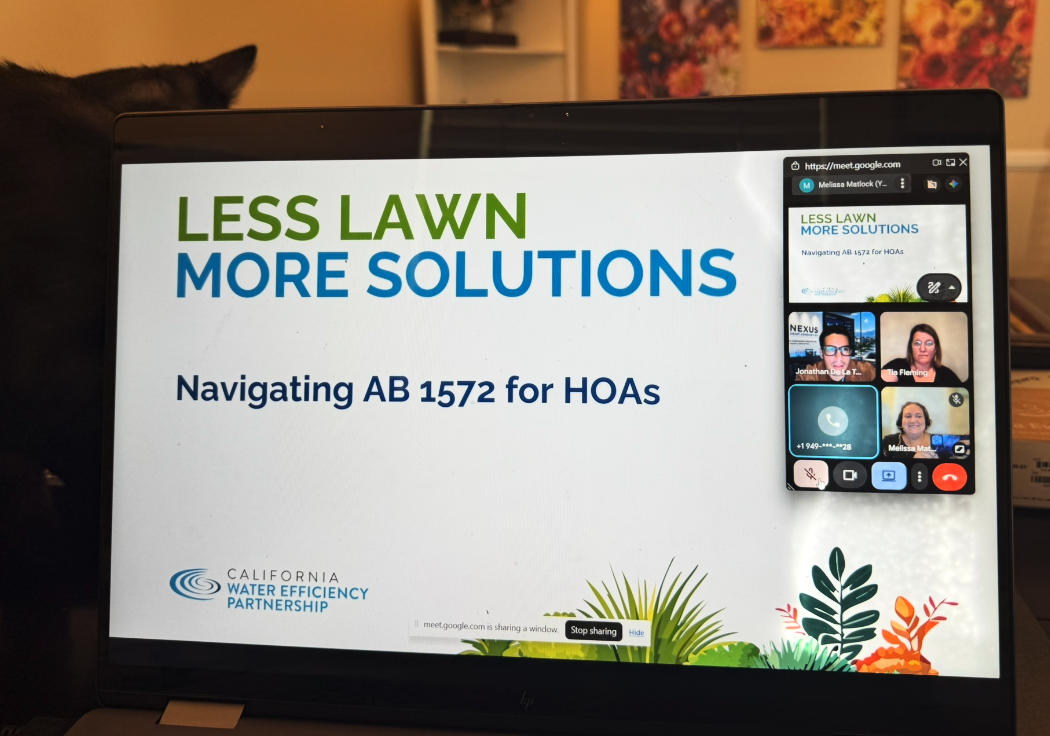
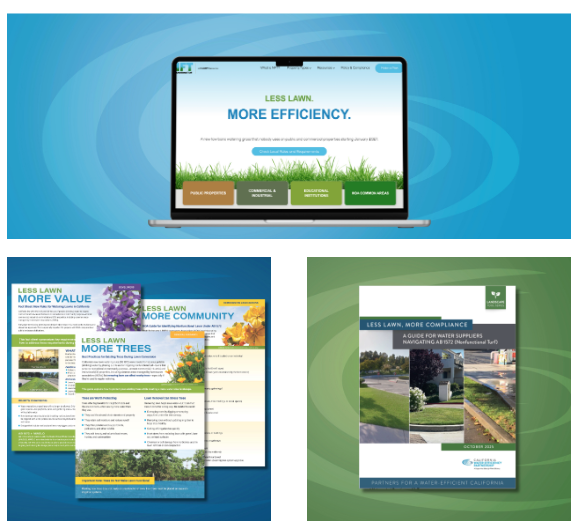
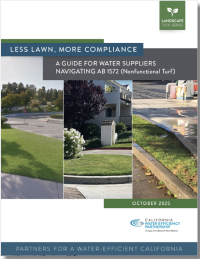
As water agencies across California continue expanding turf replacement programs, direct installation programs, rebates, technical assistance, and customer education in response to Making Conservation a California Way of Life and Assembly Bill 1572, Zone 0 adds another important consideration to how we think about the landscapes replacing turf. The question for our community is changing beyond "how do we help Californians use less water outdoors?" to an even bigger question: How do we help Californians create landscapes that are water-efficient, climate-appropriate, healthy, maintainable, and resilient to wildfire?
Read the full article: Zone 0 Is Coming: What California’s New Defensible Space Rules Mean for Water-Efficient Landscape Transformation
Initiative to Streamline Water Data Reporting in California Moves Into Next Phase
Following a successful September 3 launch webinar, the Initiative to Streamline Water Data Reporting in California (ISWDR CA) is moving forward. Co-led by CalWEP, ACWA, the California Data Collaborative, and the California Water Data Consortium, the initiative aims to reduce redundant reporting and build a coordinated framework where information collected once can serve multiple purposes.
Urban water suppliers can help shape this work by completing the Reporting Impact Survey. The survey gathers information on staff time and other resources spent meeting major reporting requirements to identify opportunities for improvement. It takes about 10 minutes with estimates of staff hours and related costs handy.
Opportunities are coming to participate in engagement sessions, technical work, and future pilot testing. Visit StreamlineWaterDataCA.org to learn more and stay involved. Organizations interested in financially supporting the next phase can contact CalWEP.
CA Water Plan Advisory Committee Update
What can the state do to help local and regional water solutions succeed?
Upgrading backbone infrastructure and providing funding are a big part of the answer, but not all of it. The California Water Plan 2028 Advisory Committee is shaping recommendations in four areas that reflect the state’s main tools: funding and affordability, infrastructure, regulatory reform, and data. Each one tackles something local agencies can’t solve on their own, from making projects affordable to speeding up permitting. CalWEP has been especially active on data.
You don’t have to be an expert to see the value of improving our data. Good data helps projects work better and move faster. Better weather forecasting and flow monitoring, for example, help operators know when water can safely be stored. And good data starts with the basics, like shared definitions and streamlined reporting (which you’ve already read about above 🙂)
Efficiency will always be California’s first line of defense, and meeting our water challenges will take every solution at the table. CalWEP will keep helping members get the most out of every investment, while advocating for the data systems California needs.
Looking Ahead
Looking ahead to 2027, CalWEP is collaborating with partners on a potential proposal to establish tax parity for water conservation rebates, building on Assemblymember Holden’s AB 533. We’ll be working with the State Water Resources Control Board on updaing the Getting to Efficiency pilot with the new reporting calendar to help our members prepare for upcoming requirements. With key deadlines ahead for large landscapes and other requirements, we’ll focus on helping members turn policy into workable next steps.