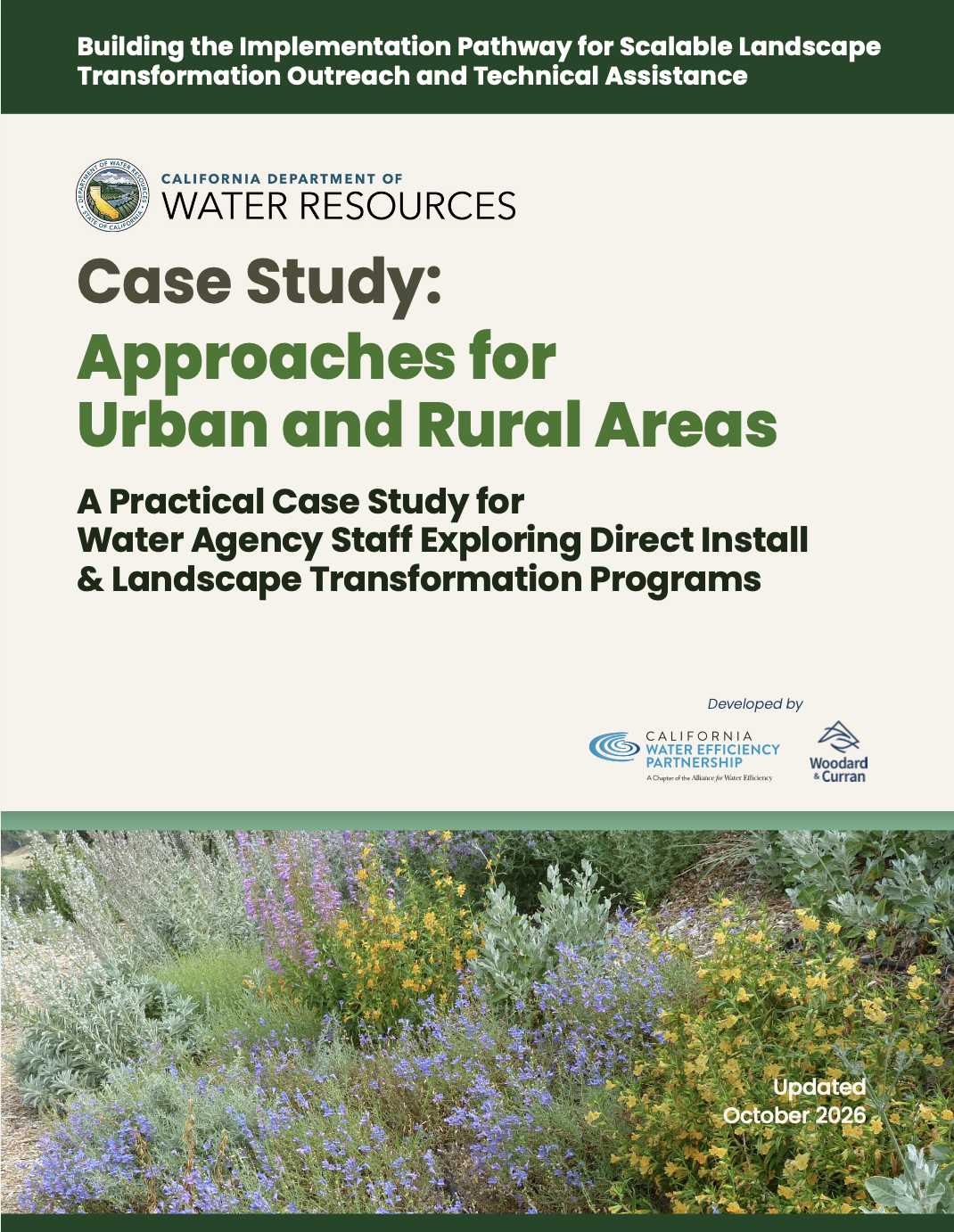
A Practical Case Study for Water Agency Staff Exploring Direct Install & Landscape Transformation Programs
This case study summarizes how direct‑installation turf removal and landscape transformation programs can be designed and delivered effectively in both urban and rural settings.
Direct‑install models reduce common participation barriers by lowering or eliminating upfront costs and administrative complexity for participants, and by providing design support, contractor installation, and streamlined eligibility and verification. The guidance in this case study is informed by California Water Efficiency Partnership (CalWEP) engagement workshops conducted in March–April 2026 and follow‑up discussions with water agencies and implementation partners across California.
Developed by California Water Efficiency Partnership, Watershed Progressive and Land Resilience Partnership with support from the California Department of Water Resources
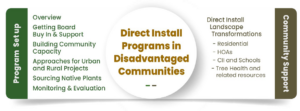
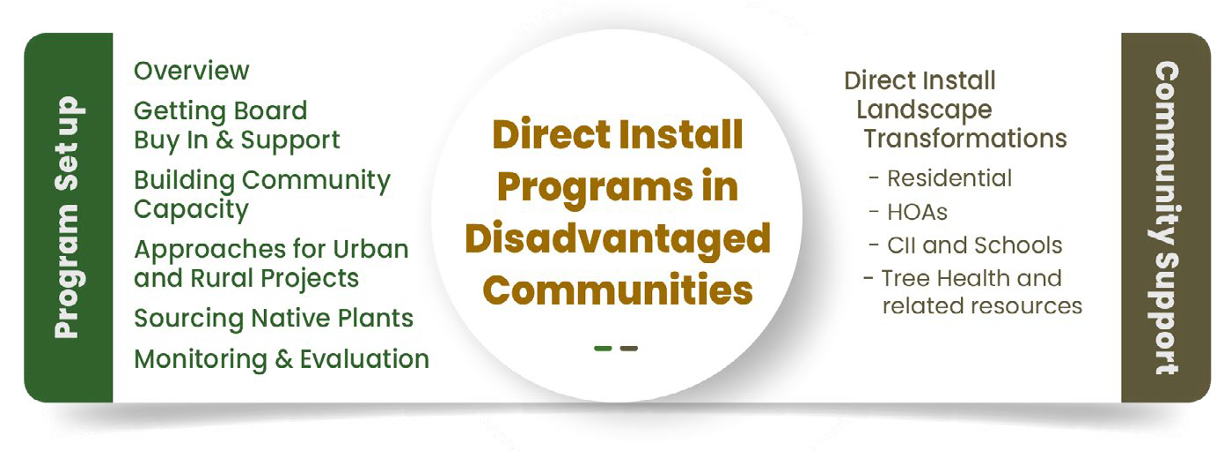
This case study is part of a California Water Efficiency Partnership (CalWEP) series on Direct Install and Landscape Transformation (DI / LT) programs that explore the elements required to successfully design, implement, and scale these efforts across California. Each case study in the series is intended to stand on its own, while also contributing to a broader picture of how DI / LT programs can be designed, delivered, and scaled across California. Together, these case studies draw on insights gathered through surveys, interviews, and meetings with practitioners who have successfully implemented these programs across diverse contexts. Across the series, readers will find practical guidance, lessons learned, common challenges, and actionable recommendations, supported by real–world examples, to inform the development and refinement of their own direct installation programs.