A Practical Case Study for Water Agency Staff Exploring Direct Install & Landscape Transformation Programs
Direct‑install turf removal and landscape transformation programs are increasingly recognized as effective tools for reducing water use, expanding participation, and advancing equity goals, particularly where traditional rebate programs have underperformed. Through California Water Efficiency Partnership (CalWEP) engagement workshops, statewide surveys, and practitioner discussions, water agencies consistently reported that direct‑install approaches can deliver measurable benefits when designed and implemented carefully. However, these same efforts revealed that the primary barrier to advancing direct‑install programs is not technical feasibility or community interest, but securing governing board (Board of Directors or City Council, herein referred to as “boards”) and senior leadership buy‑in.
This case study focuses on how water agency staff have successfully navigated that internal decision‑making process. It examines what boards and senior leadership are actually deciding when asked to approve direct‑install turf removal programs; identifies the priorities and concerns that most influence approval; and highlights practical tools, framing strategies, and entry points that agencies have used to move programs forward.
Developed by California Water Efficiency Partnership and Woodard & Curran with support from the California Department of Water Resources
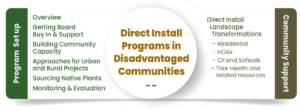
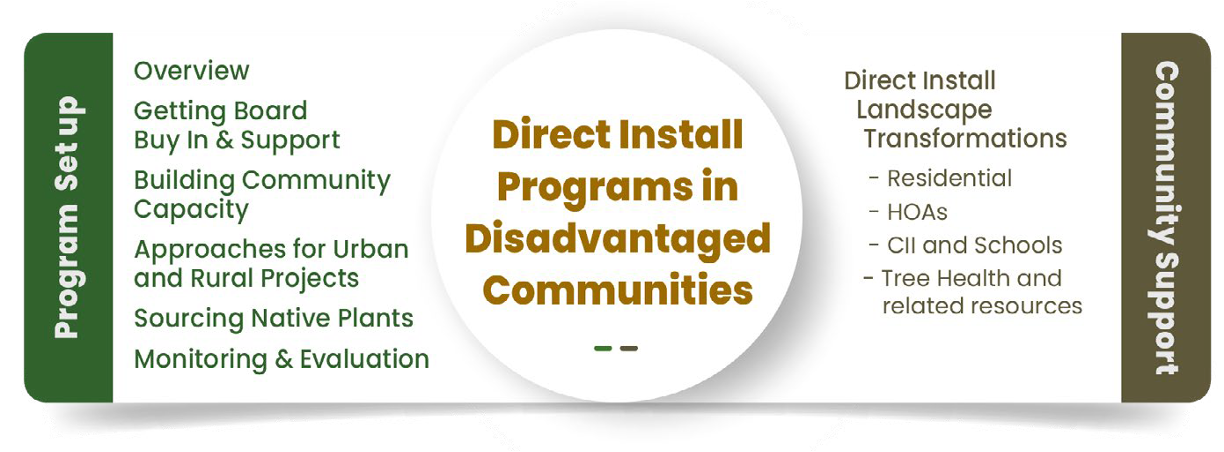
This case study is part of a California Water Efficiency Partnership (CalWEP) series on Direct Install and Landscape Transformation (DI / LT) programs that explore the elements required to successfully design, implement, and scale these efforts across California. Each case study in the series is intended to stand on its own, while also contributing to a broader picture of how DI / LT programs can be designed, delivered, and scaled across California. Together, these case studies draw on insights gathered through surveys, interviews, and meetings with practitioners who have successfully implemented these programs across diverse contexts. Across the series, readers will find practical guidance, lessons learned, common challenges, and actionable recommendations, supported by real–world examples, to inform the development and refinement of their own direct installation programs.