








 I definitely did not expect to draw a river on my first day at Harvard Business School.
As part of our opening session this past July, each participant in the Strategic Perspectives in Nonprofit Management program was asked to map their Path of Life, the highs, the lows, the pivots that brought us to this moment. So, on brand for a water nerd, I drew my path as a river that began with wildfires in Laguna Beach, wound through strawberry fields in Santa Cruz County, rushed through rapids (water metaphor for my own burnout) in Detroit and Oakland, and widened into calmer waters at CalWEP HQ. A tributary joined my river, labeled parenthood, because some of the most important currents in our lives don't originate with us and are still central to our identity and purpose.
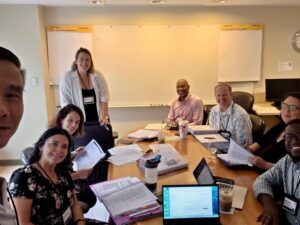
Around the table, my peers for this weeklong course at Harvard, all executive directors and CEOs from nonprofits across the world, shared their own maps. The maps looked very different, their missions spanning food security, healthcare, housing, addiction prevention, and more, but the threads were familiar: creativity, family, faith, adaptability, tenacity.
By the end of the week, I also found myself thinking about CalWEP differently. We too are a tributary feeding something much larger: California's water future. A resilient water future will need every solution available and water efficiency is not just low-flow fixtures and rebate programs anymore. It is a sophisticated, data-driven discipline that touches every sector of California's economy, and it deserves to be treated as the essential infrastructure it has become.
There were four ideas from the week that I keep coming back to, and I want to share them because I think they apply directly onto the work we are all doing together as a broader CalWEP community.
1. Proximity is Everything
One lesson that came up repeatedly during the week was the concept of proximity - the idea that you cannot effectively solve a problem that you are not close to. The leaders in that room who were doing the most meaningful work were not the ones with the biggest budgets or the most staff. They were the ones embedded in their communities, close to the people they serve, close to the friction and the complexity of real implementation.
As a membership-based, implementation-focused non-profit this was especially resonant. CalWEP members are as close to this work as it gets. They are the ones fielding calls from customers, collecting critical data and developing innovative solutions, navigating new state mandates, and overall, trying to do more with less. And CalWEP exists to be close to that work, to bring resources, tools, and peer connection to the people doing it every day. And crucially, we carry that on-the-ground experience into the policy rooms where decisions get made in Sacramento. Our proximity to the problem is not incidental. It is our greatest asset!
2. Lead, Seed, Rally
One framework from the week that clicked immediately was Lead, Seed, Rally. Working towards a aspirational vision often requires working at three levels simultaneously: leading where direct intervention is needed, seeding where you can empower others to act independently, and rallying communities and systems around a shared vision.
Here is how that maps to CalWEP's work:
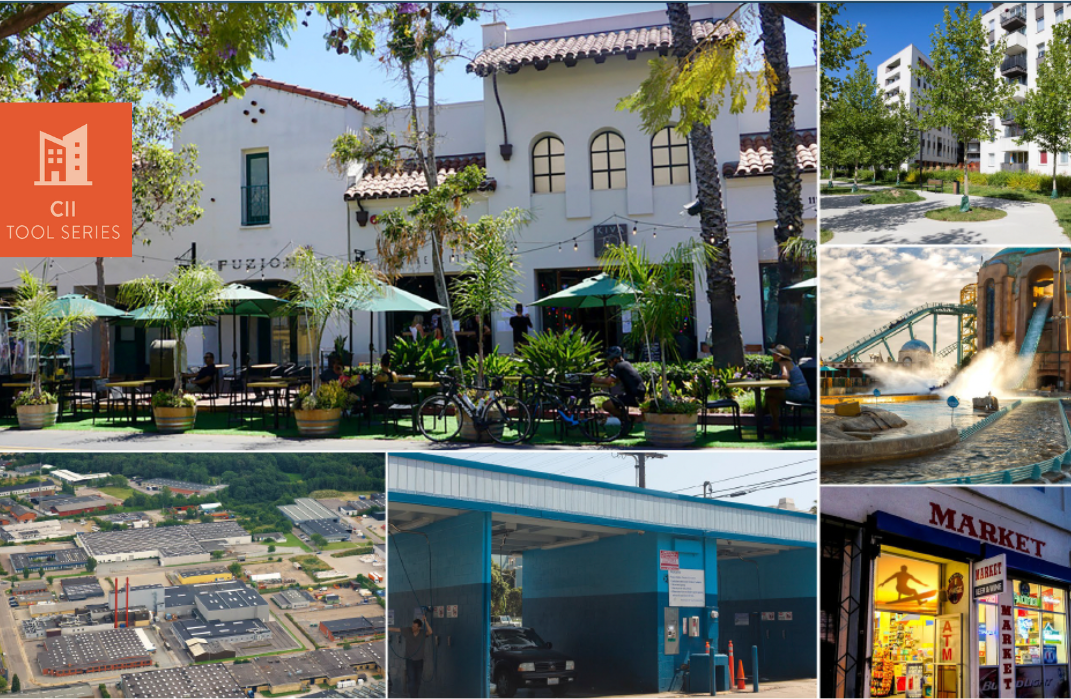
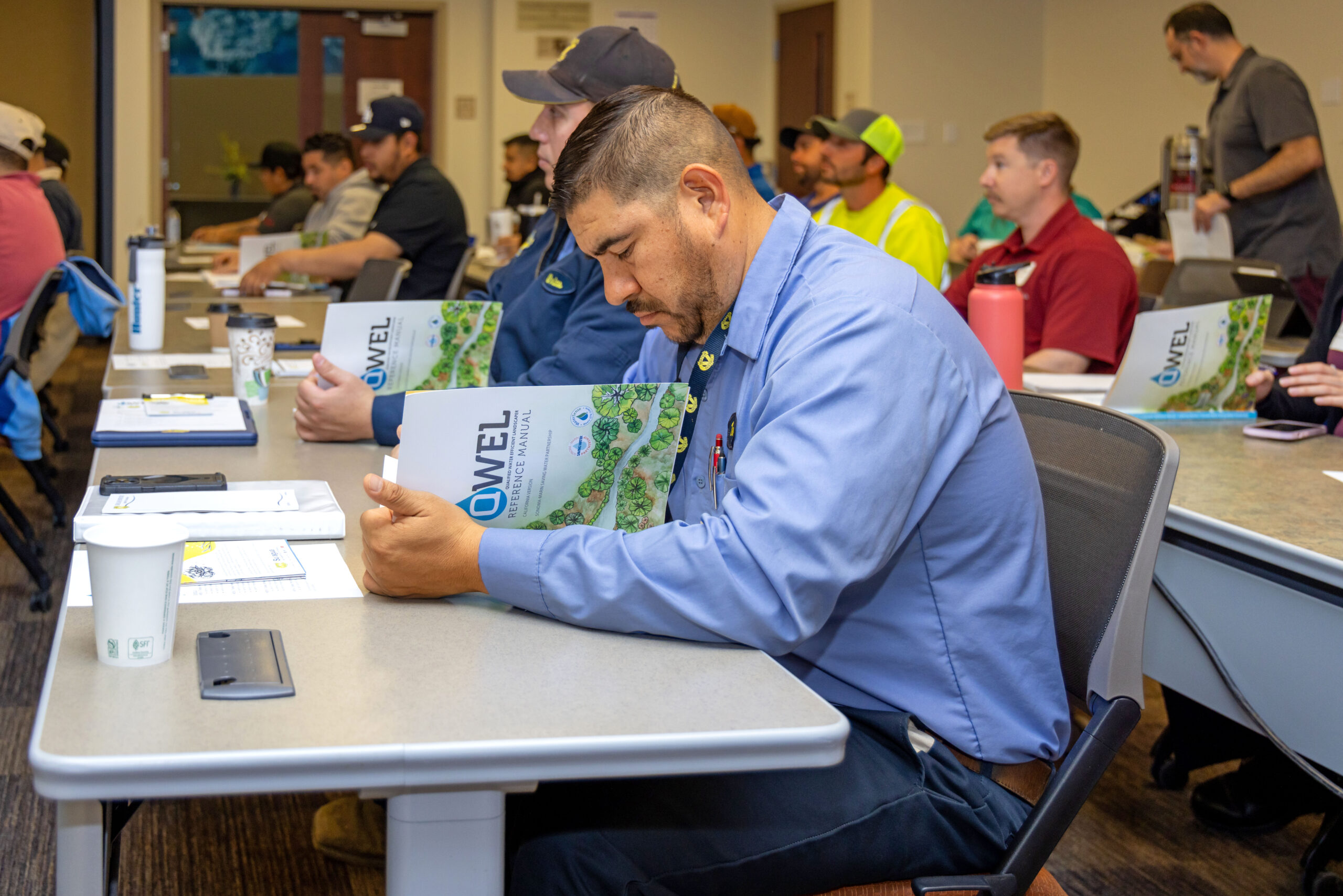
LEAD through direct engagement like our trainings with landscapers, plumbers, and CII facilities managers, our compliance support pilots in underserved communities, our hands-on work with water agency staff to build the skills and capacity to implement conservation programs that actually work on the ground.
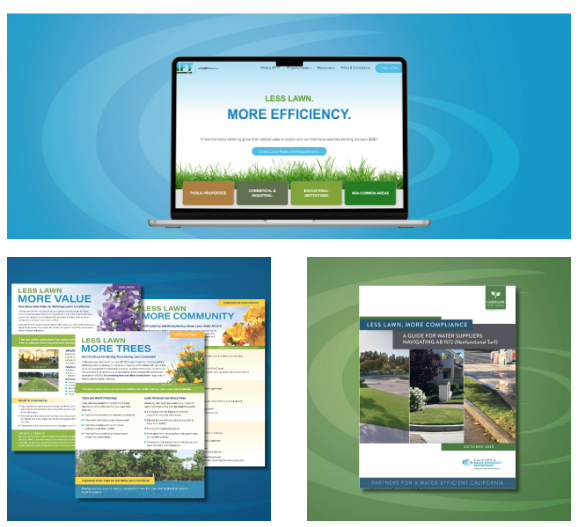
SEED through the tools and resources we develop and share freely including the Nonfunctional Turf Toolkit, the Compliance Resource Hub, the guides and frameworks that empower your agency to go further than anyone can ever go alone.
RALLY through policy and advocacy – through showing up at the Capitol, on Advisory Committees, and at the State Water Board, making the case that water efficiency is not a nice-to-have but often the fastest, cheapest, and most equitable path to a resilient water future.
Every one of our members touches at least one of these. Most of our members touch all three.
3. Question Zero
Question Zero is the fundamental question that sits underneath everything else an organization does. Not what do we do, but why we do it.
CalWEP's question zero is this: how do we build the most resilient water future for every California community, regardless of location or resources?
Maximizing water efficiency is our answer. Both because it saves water and because efficiency is the multiplier. Every drop saved makes every other water investment work harder. Every agency that hits its conservation targets creates more room for the communities that are still catching up. And every customer reached with a message about fixing a leak, claiming a rebate, or changing their watering schedule is a voter and a taxpayer whose understanding of water is being shaped by those interactions. Efficiency doesn't just change how we use water at home, it’s about how value water as a culture. In a state that is simultaneously losing snowpack, depleting groundwater, and investing billions in new water sources, efficiency is the foundation solutions are built on. I don't think we say that enough.
4. Culture, Humility, and Building Something That Lasts
A final concept I want to bring back to every conversation we have at CalWEP going forward: holonomy. Holonomy describes the relationship between the part and the whole, it’s the idea that each individual entity is complete in itself and simultaneously part of a larger, interdependent system. A water agency is whole unto itself, with its own mission, budget, and community to serve. And yet it is also part of California's broader water system, and part of the CalWEP community. What happens at one agency ripples outward. What CalWEP builds together strengthens every part.
You see holonomy in action every time a CalWEP member volunteer leads a committee or task force, bringing their own expertise and agency perspective while building something none of us could build alone. The trust, transparency, and shared belief in the process that makes collaboration possible - that is our culture. (And culture, as we were reminded more than once this week, eats strategy for breakfast.)
You can have the best strategic plan in the world and it will not matter if the people doing the work do not believe in it, do not feel safe enough to learn and grow, and do not see themselves as part of something larger. With climate change bringing record droughts and floods, federal funding and policy in flux, and the pressure on water managers higher than ever, the stakes of this work have never been clearer.
A Note of Gratitude
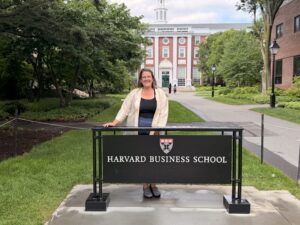 None of this would have been possible without the HBS Association of Northern California, whose Social Impact Scholarship made this week accessible to me and to CalWEP. I do not take that investment lightly. It will show up in how I lead, in the decisions we make together, and in the work we do on behalf of every California community counting on us to get this right.
Thank you for the work you do every day. I came back from this week more certain than ever that we are the right people, doing the right work, at exactly the right moment.
With gratitude,
Tia Fleming
Executive Director, California Water Efficiency Partnership (CalWEP)