




By Dani Morgutia, Senior Program Manager
As public servants, we all know getting information in front of our customers is one thing. But getting them to participate in our initiatives or programs is another. Water agencies across California invest significant time and resources developing rebates, conservation programs, landscape transformation initiatives, and other opportunities intended to help customers use water more wisely. But even the best-designed program cannot deliver its full impact if the communities that could benefit from it are not participating.
That is where outreach, equity, and the art of relationship-building must become part of program design.
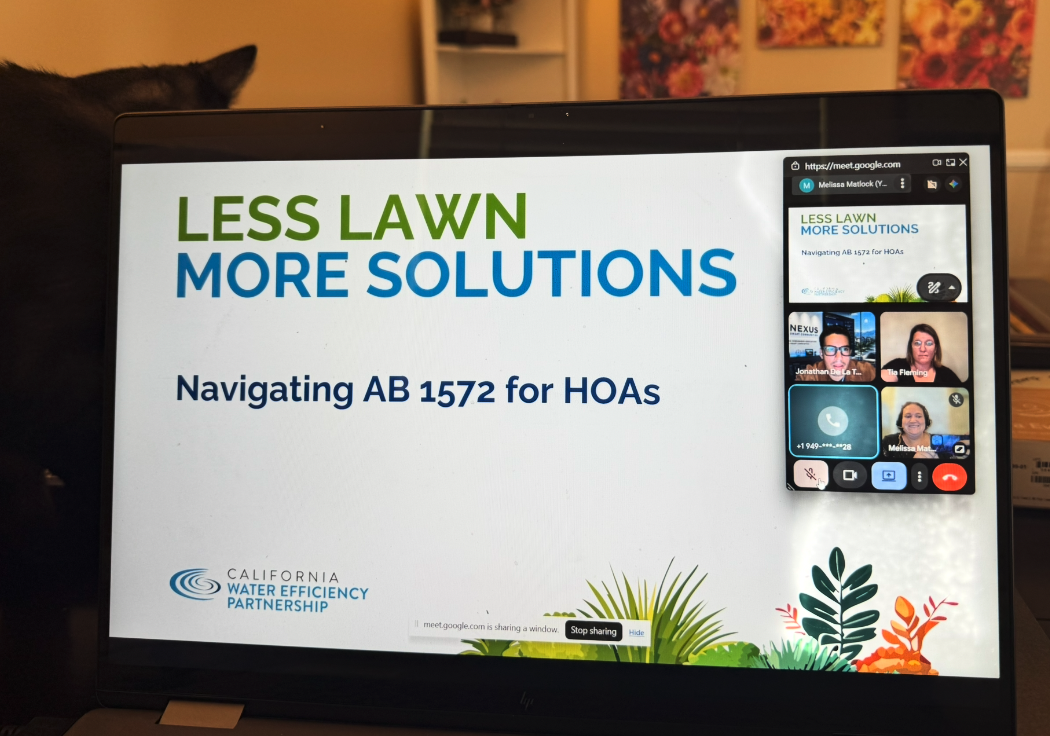
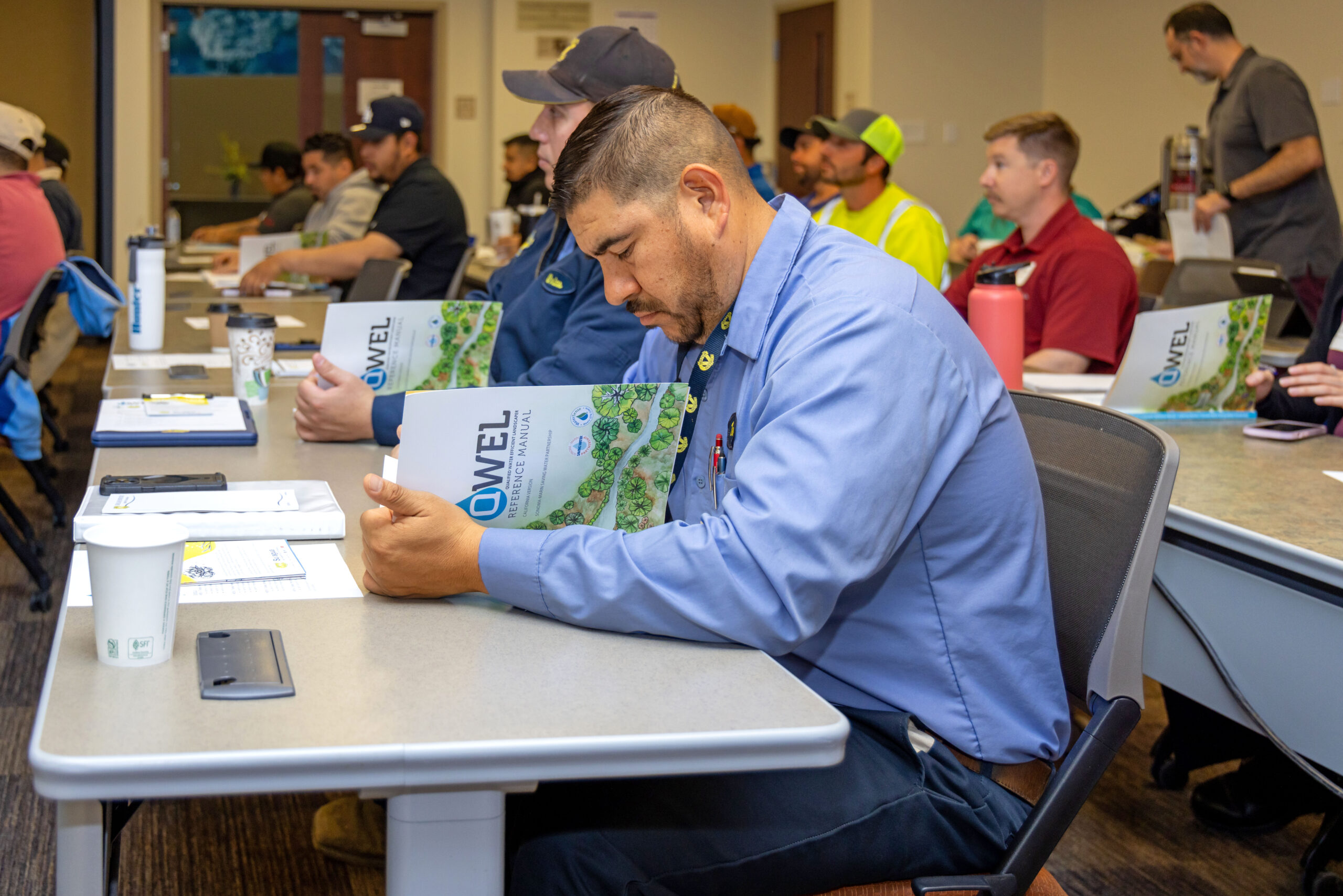
On August 27, CalWEP, alongside our partners at Woodard & Curran, hosted Developing an Outreach & Equity Strategy to Increase Program Participation, an interactive training webinar designed to help water efficiency professionals move beyond simply distributing information and begin developing outreach strategies rooted in understanding audiences, identifying barriers, building trust, and meeting communities where they are.
The training was developed and facilitated by Melissa Matlock and Dani Morgutia of CalWEP, alongside Katie Evans and Ryan Hirano of Woodard & Curran, as part of CalWEP’s ongoing Department of Water Resources-funded work to strengthen water agency capacity and support successful landscape transformation programs across California.
Equity Starts with Asking Who Is Missing
One of the central ideas behind the training was simple: before deciding how to reach a community, we first need to understand who we are trying to reach and why they may not already be participating.
For water efficiency programs, equity means recognizing that customers face different barriers and designing programs so everyone has a fair opportunity to participate.
That requires agencies to ask questions such as:
- Who is not participating?
- What barriers may be preventing participation?
- How can those barriers be reduced or removed?
Those barriers can look very different from one community to another. They may be financial, such as an inability to cover upfront project costs while waiting for a rebate. They may involve language, transportation, internet access, work schedules, caregiving responsibilities, awareness of available programs, or trust in government agencies.
Sometimes, the barrier we assume exists may not be the barrier at all. That distinction became especially important during the interactive portion of the training.
What Happens When We Stop Assuming?
Participants worked through a hypothetical scenario involving Meadow Vista, a neighborhood of approximately 1,200 single-family homes that had experienced zero participation in a turf replacement rebate program over the previous three years. Participants were given some basic information about the community and then asked to consider why residents might not be participating.
The Reponses from webinar participants came in quickly! Cost. Time. Language barriers. Lack of awareness. Concerns about maintenance. Attachment to existing lawns. HOA requirements. Trust. Fear of impacts to existing trees. Program complexity. Limited access to skilled labor.
But then participants were asked a second question that totally changed the conversation:
What assumptions might we be making about this neighborhood?
Maybe we are assuming residents received our previous outreach. Maybe we are assuming they want to change their landscapes. Maybe we are assuming they trust the agency delivering the message. Maybe we are assuming cost is the problem—or that residents understand what a water-efficient landscape could look like in the first place.
Before selecting a solution, participants overwhelmingly identified the need for more information directly from the community: resident input, HOA policies, preferred communication methods, community leaders, existing landscapers, neighborhood gathering places, financial constraints, and how residents actually use and value their lawns.
The exercise reinforced one of the most important messages of the training: demographic information can help us understand a community, but it cannot tell us everything we need to know about why people make decisions.
Meet People Where They Are.. Literally and Figuratively
Traditional outreach often starts with the communication channel: send an email, post on social media, mail a flyer, update the website. An equity-focused strategy starts with the audience. Who are they? Where do they already receive information? Who do they trust? What matters to them? What would make participating easier—or harder?
From there, agencies can determine which outreach channels actually make sense. That may mean digital communication, but it could also mean direct mail, community events, neighborhood visits, presentations, surveys, local newspapers, libraries, senior centers, schools, community centers, or conversations facilitated through trusted organizations.
As Elise Shtayyeh, Water Conservation Coordinator with Solano County Water Agency, reflected after the training:
“Meet people where they are, literally and figuratively. Speak to them in a way that makes sense to them—non-jargony and approachable.”
Elise also emphasized that identifying who you want to reach is the first step toward understanding how to communicate with them effectively.
There is no single outreach strategy that works for every community. Effective communication requires understanding the audience first and then building the message and delivery method around them.
Trusted Partners Can Reach Places Agencies Cannot
One of the largest themes throughout the training was the value of relationships and partnerships. Water agencies don’t have to build every community connection from scratch. Community-based organizations, neighborhood groups, schools, libraries, faith-based organizations, local businesses, HOAs, senior centers, landscapers, and other community institutions may already have relationships with the very audiences an agency is trying to reach.
In fact, during the interactive Menti activity, participants were asked what they would try first if they had a limited outreach budget. “Find a community partner” was the top response, receiving top votes—more than community events, neighborhood visits, social media, direct mail, or surveys. A trusted messenger can sometimes accomplish what another agency mailer cannot—not because the information itself is different, but because the relationship already exists.
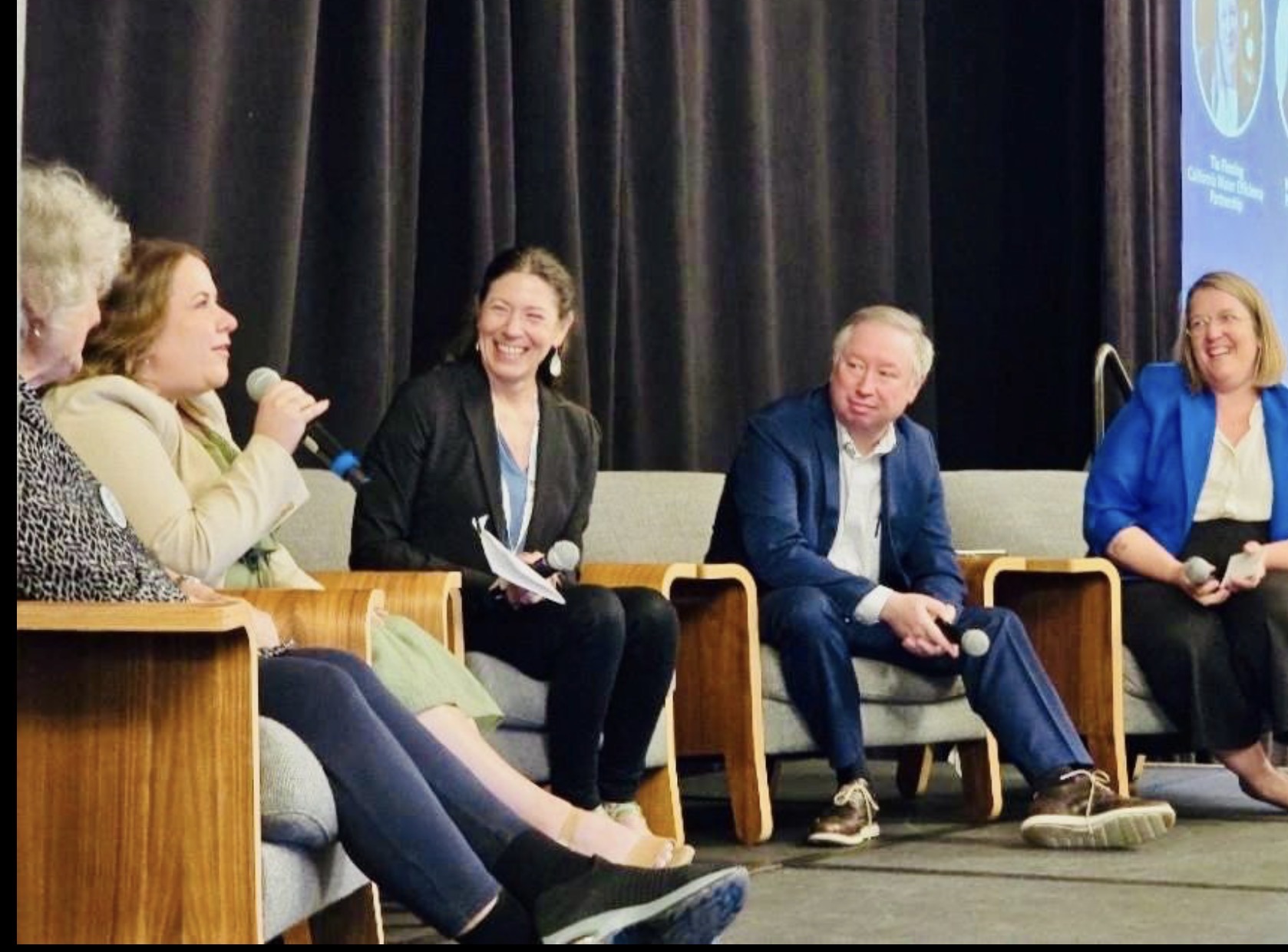
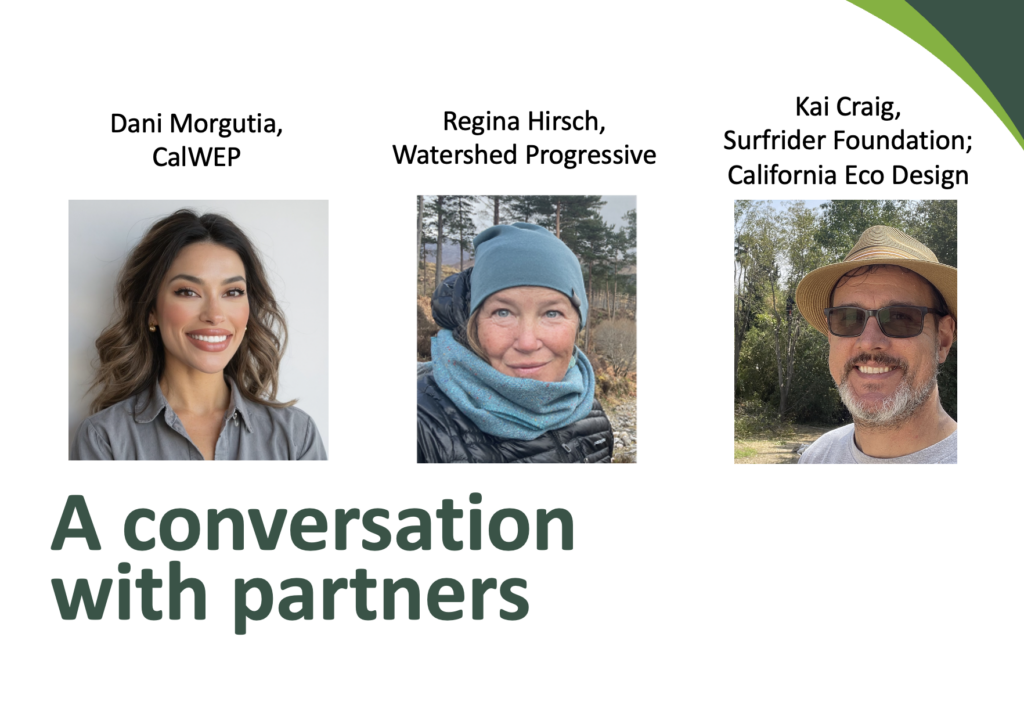
To explore what that looks like in practice, the training included a panel conversation with Kai Craig of Surfrider Foundation and California Eco Design, Regina Hirsch of Watershed Progressive, and Dani Morgutia of CalWEP, who shared perspectives from community engagement, climate-resilient landscape design, program implementation, and water agency outreach. The conversation explored the importance of identifying partners whose work and relationships naturally align with program goals, approaching partnerships as relationships rather than simply distribution channels, and creating opportunities to listen to what community partners already know about the people an agency hopes to serve.
But relationship-building is not limited to working through community partners. It also means reconsidering the relationship an agency itself has with its customers.
For Janett Robledo, Water Conservation Coordinator with East Valley Water District, that was one of the biggest takeaways from the workshop:
“What did stick out to me was the value of building relationships with our customers, especially if we are asking them to take action. It’s making me think differently of how to do outreach, with CII customers, in particular. Mailers might be great, but in-person introductions might be more beneficial to grow our conservation efforts and end transactional interactions.”
That perspective gets to the heart of why an outreach and equity strategy matters when we’re in the business of protecting our most precious natural resource. If our goal is sustained water efficiency, not simply participation in one rebate or compliance with one requirement, then the relationships we build today can influence how customers engage with programs for years to come.
Intentional Outreach Can Build More Sustainable Programs
Equitable outreach is about understanding why someone is not participating before deciding how to reach them. It is acknowledging that barriers can be financial, logistical, cultural, informational, or rooted in trust. And it is understanding that some of the most effective messengers may already be working within the communities we are trying to reach. As California continues investing in landscape transformation and other water efficiency programs, expanding participation will require us to think beyond how many people receive our information.
We should also be asking: Who are we still not reaching, and what would it take to change that?
Sometimes the answer may be a better message, it may be a different outreach channel, or it may mean changing part of the program itself. And sometimes, the most important thing an agency can do is stop talking long enough to truly listen. That is where equitable outreach begins.
A recording of this webinar is available to the public and can be found here. This event was part of a larger project sponsored by the Department of Water Resources. Stay tuned for more resources coming soon!